HR Workforce Analytics Dashboard
A human resources interactive dashboard that helps to understand employee demographics, job satisfaction, and attrition
Problem Statement
The organization was facing challenges in maintaining stable retention rates and lacked a centralized platform to monitor the health of its workforce. Key operational issues included: Data Silos: HR metrics were scattered, making it difficult to spot trends or gain an accurate view of overall headcount. Unidentified Attrition Drivers: High employee turnover was occurring, but leadership lacked clear visibility into whether it was driven by specific demographics, overworking, department friction, or poor compensation. Unclear Decision-Making: Without clear metrics, HR teams could only respond to resignations after they happened, rather than anticipating and preventing employee departures.
The Analytics Process
To solve this, the project followed a structured data analytics workflow using Power Query and Power BI:
- Data Cleaning & Transformation (Power Query): Imported the raw dataset provided by HieLite Academy. Standardized text inputs, handled missing values, and created logical age groups (e.g., 18–25, 26–35) to make the demographic analysis cleaner.
- DAX Measures: calculated explicit KPIs like Total Employees, Employees Left, and Active Employees.
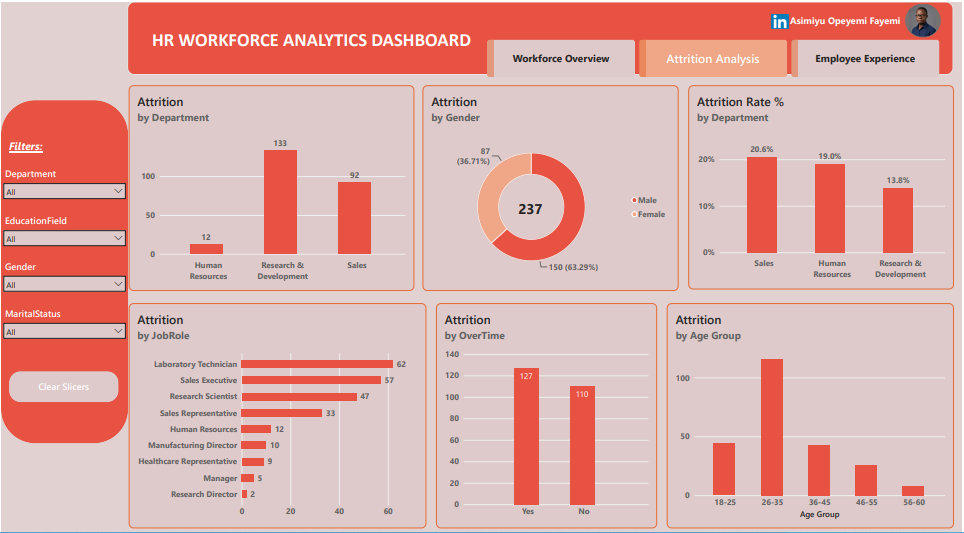
- Dashboard Design (Power BI): Designed a cohesive, three-tab reporting layout (Workforce Overview, Attrition Analysis, and Employee Experience) using a uniform, modern, nice color palette to improve user navigation and dashboard scannability. Built intuitive side-panel slicers (Department, Education Field, Gender, Marital Status) to let stakeholders drill down into specific workforce segments seamlessly.
Key Lessons Learned
Building and analyzing this dataset provided vital professional insights into both technical BI development and strategic human resource management:
- Analyzing the data showed a direct relationship between overtime hours and higher attrition. This highlights that structural workload imbalances are often a primary driver of employee turnover.
- The dashboard revealed that attrition is heavily skewed toward specific job roles like Laboratory Technicians and departments like Sales Executives, as well as the 26–35 age group. Retention strategies must be tailored to these specific groups.